

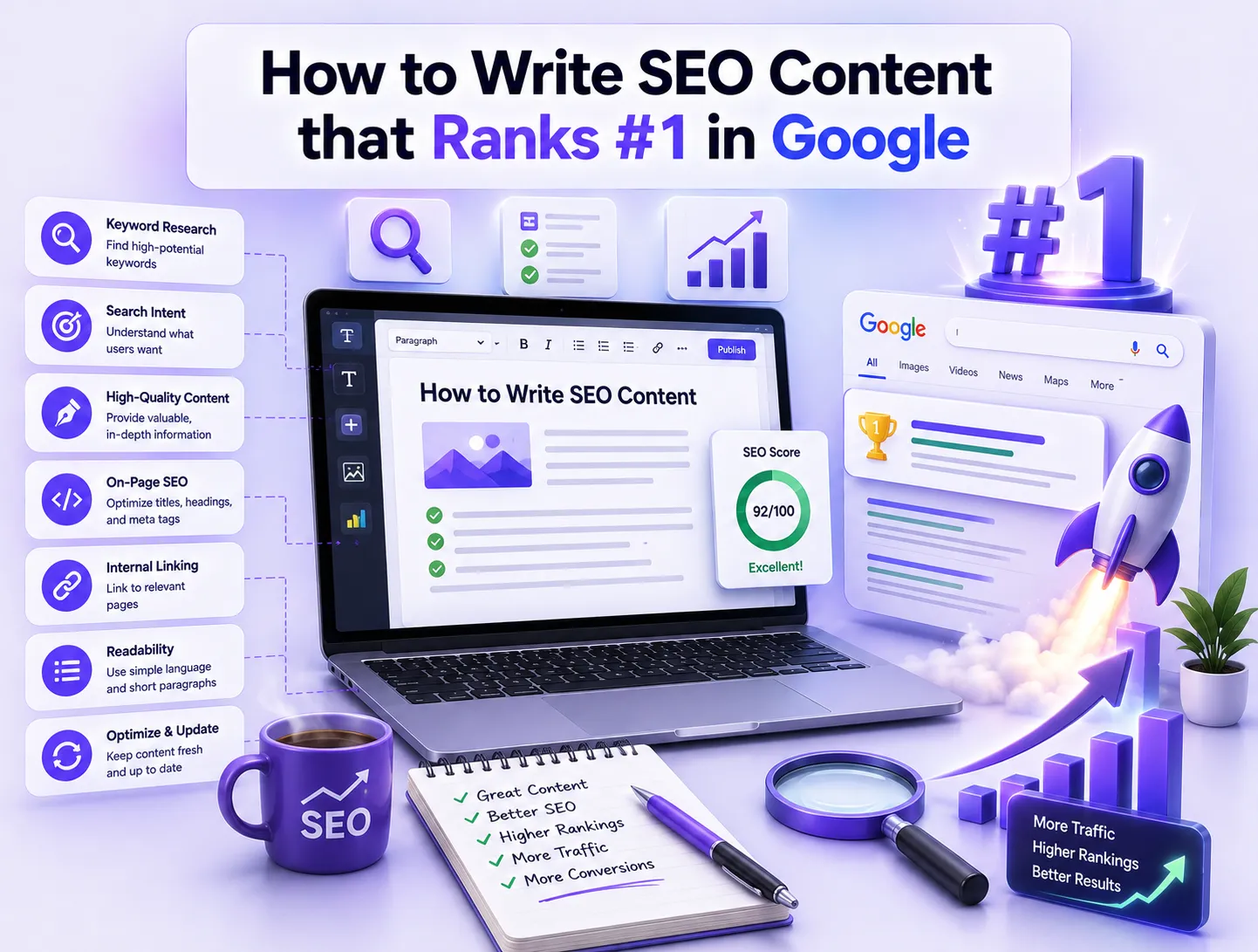
How to Write SEO Content That Ranks in Google
Achieving top-tier placement on search engine results pages requires much more than simply stuffing keywords into random paragraphs; it demands a rigorous, data-driven content writing framework. Modern search algorithms evaluate digital content based on topical depth, structural clarity, entity relationships, and how precisely a page satisfies consumer search intent. When published content fails to secure visibility, it is usually due to weak search intent alignment, thin textual analysis, or an absence of proper technical formatting. Establishing a dominant organic footprint requires a systematic approach to keyword research, flawless structural hierarchy, and professional on-page SEO execution that signals absolute authority to search engine crawlers.
1. Decoding User Search Intent and Strategic Keyword Placement
Before typing a single sentence of your article, conducting deep search intent analysis ensures you understand exactly what information target audiences expect to find. Whether searchers seek informational guides, transactional product pages, or navigational brand sites, your content structure must mirror that specific intent immediately. Distributing primary and secondary keywords naturally across your meta tags, introduction, and heading architecture signals clear topical focus to automated search crawlers without triggering over-optimization penalties.
2. Structuring Content to Win Google Featured Snippets and AI Overviews
Capturing prime real estate at the very top of search result pages requires formatting your information into easily digestible, highly scannable structural blocks. Providing concise, 40-to-50-word direct answers beneath clear heading tags significantly increases your chances of getting featured in search summary boxes and conversational AI overviews. Structuring complex data points into comparison tables and bulleted lists helps search engine bots parse information rapidly, elevating your overall page relevance score.
3. Establishing Deep Topical Authority and Semantic Richness
Search engines prioritize comprehensive content assets that thoroughly explore every subtopic related to a core subject over shallow, generic articles. Utilizing latent semantic indexing terms, industry-specific terminology, and related subheadings creates a rich contextual web that search algorithms recognize as genuine subject expertise. Demonstrating absolute mastery over your niche prevents bounce rates and signals to search engines that your domain provides the most exhaustive answer available online.
4. Enhancing Dwell Time Through Engaging Formatting and Readability
User engagement signals—such as average dwell time, scroll depth, and interaction rates—play a massive indirect role in sustaining long-term search engine rankings. Walls of dense text frustrate readers and cause immediate site abandonment, sending negative behavioral signals to search algorithms. Breaking up content with descriptive subheadings, short punchy paragraphs, and clean visual layouts keeps visitors hooked from the opening hook to the final conclusion.
SEO Content Writing Strategy and Ranking Factors Matrix
| Content Optimization Factor | Poor Execution Result | Optimal Content Strategy | Ranking Impact |
|---|---|---|---|
| Search Intent Alignment | High bounce rate & quick return to search | Match exact user query type (info/trans) | Critical for top 3 positioning |
| Keyword Distribution | Keyword stuffing penalty or zero relevance | Natural placement in title, H1, and intro | Essential for topical indexing |
| Content Depth & Length | Classified as thin content by crawlers | Comprehensive 1000+ words with semantic subtopics | Drives long-tail keyword visibility |
| Structural Readability | Reader fatigue & immediate site abandonment | Short paragraphs, tables, and bullet points | Boosts user dwell time and engagement |
| Technical On-Page Setup | Ignored by search bots due to bad code | Clean HTML semantics and proper heading flow | Ensures rapid crawl and indexation |
5. Maximizing Publisher AdSense Revenue with Organic Traffic
Scaling organic search rankings directly multiplies your website traffic, creating the ideal foundation for high-yielding Google AdSense display monetization. When visitors arrive from top-ranking search queries and spend minutes digesting thorough, high-value content, ad viewability and click-through rates rise exponentially. Maintaining clean, ad-friendly page layouts ensures you satisfy platform monetization guidelines while generating reliable, passive ad revenue.
6. Aligning SEO Content with Complete Technical Web Architecture
Creating world-class SEO content achieves maximum commercial impact only when backed by a fast, secure, and fully optimized digital infrastructure. Partnering with full-service agency experts at Webnestech equips your business with professional content strategies, advanced technical SEO audits, and custom web solutions designed for long-term market dominance.
Frequently Asked Questions
Essential questions regarding how to write SEO content, target high-volume keywords, and rank #1 on Google.
Satisfying user search intent completely and providing more comprehensive, valuable information than competing top-ranking pages is the most vital factor.
While length varies by niche, comprehensive guides ranging from 1,000 to 2,500 words consistently perform best because they cover subtopics in depth.
Strict keyword density percentages are outdated; modern search engines rely on semantic context, natural phrasing, and topical entity coverage.
Provide direct, precise answers (40-50 words) immediately below clear heading tags, and format supporting data in clean bulleted lists or tables.
Depending on domain authority and keyword competition, newly published SEO content typically takes between 3 to 6 months to achieve stable page 1 rankings.
Want professional SEO content that ranks #1 on Google?
Our expert optimization team is here to scale your organic search traffic and revenue.