
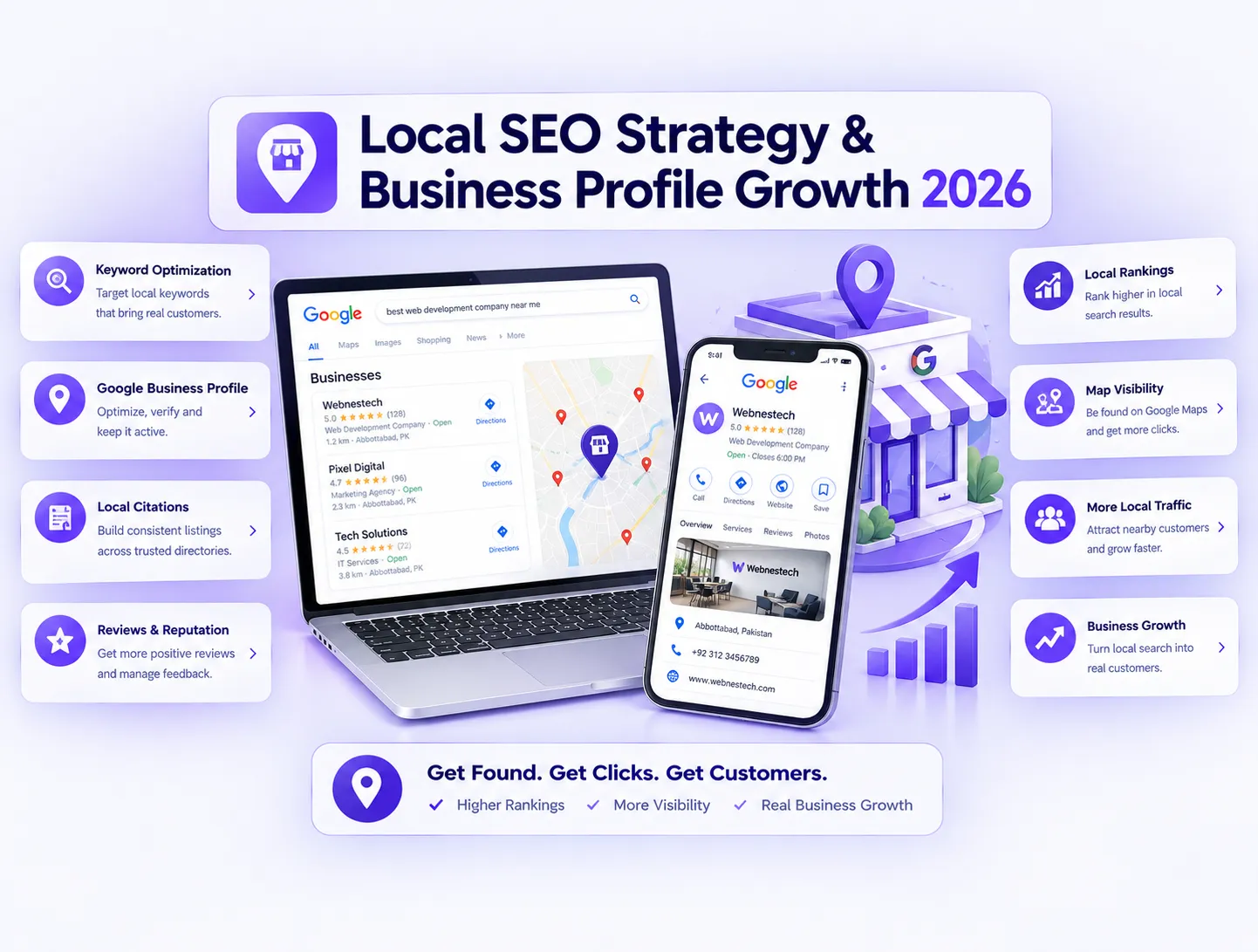
Local SEO Strategy & Business Profile Growth 2026
Dominating regional search engine results requires a structured approach to local search engine optimization, geospatial targeting, and authoritative digital presence management. As consumers rely on mobile devices and voice searches to discover nearby service providers, physical store locations, and regional agencies, establishing high local search visibility directly drives store visits, phone calls, and commercial inquiries. Leveraging professional local SEO services ensures that your business assets load instantaneously, display localized structured schema markup, and convert high-intent local traffic into loyal clients.
1. Claiming and Complete Google Business Profile Verification
Claiming and fully verifying your primary Google Business Profile listing represents the crucial first step toward local search dominance across regional target markets. Establishing verified ownership allows business owners to manage core business data, upload official visual assets, and establish authentic brand credentials directly within map ecosystems. Providing accurate contact numbers, operational store hours, precise map markers, and primary business categories ensures search engine crawlers index your business accurately for localized commercial searches.
2. Maintaining Rigid Name Address Phone (NAP) Consistency
Search engine algorithms cross-reference localized business information across hundreds of public web directories, industry registries, and social media platforms to evaluate brand legitimacy. Any discrepancies in your company name, physical street address, or primary phone number create indexation confusion and weaken local search authority. Maintaining rigid NAP consistency across every online citation source reinforces algorithmic trust and guarantees higher positioning within local map pack listings.
3. Hyper-Local Keyword Research and Search Intent Mapping
Effective local search optimization requires identifying high-volume search phrases that incorporate specific city names, neighborhood qualifiers, and "near me" navigational search modifiers. Local consumers express clear commercial intent when searching for specialized professional services or localized retail offerings within their immediate geographic vicinity. Structuring web content, service page headings, and local landing pages around these targeted geographical keywords captures high-converting search traffic right at the point of purchasing decisions.
4. Building Strategic Local Citations and Regional Backlinks
Acquiring authoritative backlinks and citation mentions from local chamber of commerce websites, regional news publications, and community partner domains strengthens geographic relevancy. Search engines evaluate the local backlink profile of a website to determine its community prominence and regional industry authority. Earning quality local links signals to search crawlers that your business is an established, trusted brand within its specific operating territory.
5. Systematic Customer Review Generation and Reputation Management
Customer review volume, star ratings, and review recency serve as critical ranking factors for local map pack placements while directly influencing consumer booking decisions. Implementing automated review acquisition workflows encourages satisfied clients to share authentic feedback and detailed experiences on your Google Business Profile. Responding promptly and professionally to all customer reviews demonstrates strong client dedication, increases consumer engagement, and improves local search algorithm rankings.
Traditional SEO vs Hyper-Local SEO Strategy Matrix
| Optimization Dimension | Traditional Organic SEO | Hyper-Local Search Optimization |
|---|---|---|
| Target Audience Scope | Global or national search queries | Geographically restricted local intent |
| Primary Search Real Estate | Standard organic search engine listings | Google Local 3-Pack and Map interface |
| Core Ranking Factors | Domain authority and editorial backlinks | NAP consistency, reviews, and proximity |
| Key Content Focus | Informational guides and general topics | Localized landing pages and service areas |
| Conversion Trigger | Digital content downloads or signups | Direct phone calls and physical store visits |
| Search Query Pattern | Broad industry terms and questions | City qualifiers and "near me" searches |
6. Implementing LocalBusiness Schema Markup and Geo-Coordinates
Embedding structured data markup using JSON-LD code on your website provides search engine crawlers with explicit details about your physical business location and operating parameters. LocalBusiness schema markup explicitly defines physical latitude and longitude coordinates, accepted payment methods, opening hours, and service area boundaries directly to search bots. This machine-readable data enhances search engine comprehension and qualifies your platform for eye-catching rich snippets in regional search results.
7. Designing Dedicated Location-Specific Service Landing Pages
Multi-location enterprises and regional service agencies must construct individual, highly customized landing pages for every city or district they actively serve. Publishing unique, non-duplicated content that highlights local client projects, localized testimonials, and specific neighborhood directions prevents duplicate content penalties while maximizing geographic coverage. Dedicated location pages allow businesses to rank organically across multiple adjacent towns without diluting main domain authority.
8. Active Google Business Profile Posting and Visual Updates
Regularly publishing update posts, promotional offers, event announcements, and high-resolution photos directly to your Google Business Profile maintains high user engagement metrics. Uploading authentic imagery of your team, office environment, completed projects, and retail store builds immediate visual trust with prospective local customers. Active profile management signals continuous business operations to search engine algorithms, supporting higher local pack ranking retention over time.
9. Mobile Optimization and Click-to-Call Conversion Engineering
Because the vast majority of local business searches originate from mobile devices while users are on the move, mobile usability is essential for converting local searchers. Implementing prominent click-to-call action buttons, interactive turn-by-turn map directions, and streamlined contact forms enables mobile visitors to connect with your business instantly. Partnering with experts at Webnestech ensures your digital infrastructure delivers sub-second mobile page loads, flawless responsive layouts, and continuous local search traffic growth.
Frequently Asked Questions
Essential technical questions regarding local SEO, Google Business Profile optimization, and local search visibility.
Proximity to the searcher, complete Google Business Profile optimization, review volume/ratings, and NAP consistency across web citations are the primary ranking drivers.
Consistent Name, Address, and Phone details across web directories validate your business location and build search engine trust required for high local rankings.
Schema markup provides machine-readable data like geo-coordinates and opening hours directly to search crawlers, increasing local search comprehension and rich results eligibility.
Publishing Google Business posts at least once a week keeps your profile active, signals ongoing business operations to algorithms, and engages prospective buyers.
Yes, authentic positive customer reviews, star ratings, and owner responses significantly influence local search ranking algorithms and client conversion rates.
Ready to dominate local search rankings?
Our custom development team is here to optimize your platform for maximum local visibility.