

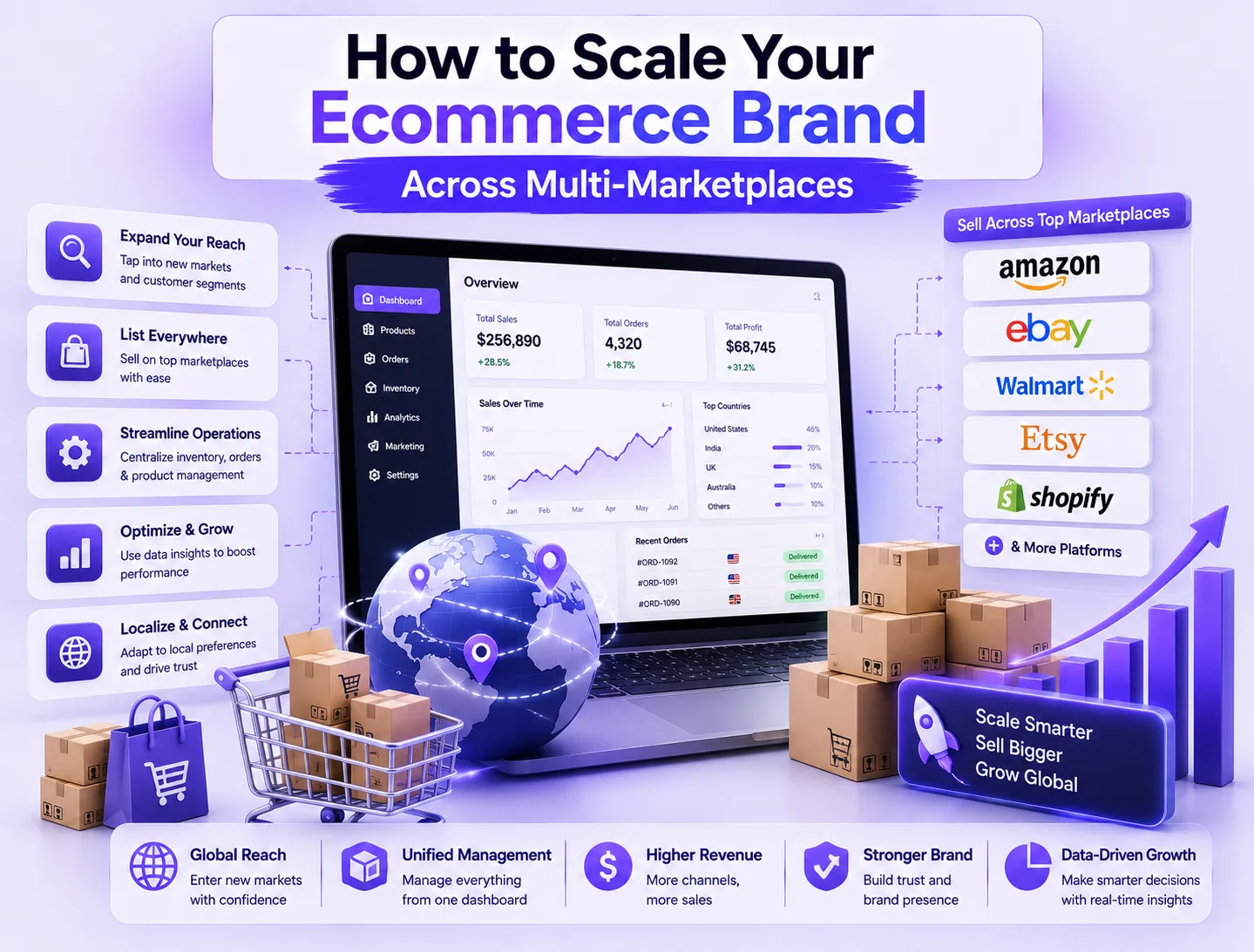
How to Scale Your Ecommerce Brand Across Multi-Marketplaces
Relying exclusively on a single e-commerce storefront leaves modern online brands vulnerable to algorithm shifts, high customer acquisition costs, and capped revenue potential. As global e-commerce consumer behavior fragments across multiple digital destinations, successful merchants are rapidly adopting a multi-channel selling model to capture buyers wherever they search and shop. Scaling effectively across competitive ecosystems requires synchronized inventory management, optimized product listings, and platform-specific SEO strategies. Partnering with seasoned marketplace experts who specialize in professional Amazon Seller Central management ensures your brand scales seamlessly across high-traffic digital retail networks without operational friction.
1. Expanding Retail Footprint on Walmart and eBay
While proprietary online stores build brand equity, establishing a presence across established retail giants like Walmart and eBay opens doors to massive waves of high-intent shoppers. Competing successfully on these platforms requires precise product categorization, competitive pricing structures, and robust order fulfillment workflows. Leveraging expert Walmart Seller setup assistance allows your brand to tap into trusted mainstream retail traffic, while professional eBay Seller Account configurations ensure your listings capture auction hunters, collectors, and everyday online buyers effectively.
2. Tapping into Viral Social Commerce via TikTok Shop
The explosive integration of social media and instant checkout functionality has transformed platforms like TikTok into powerful e-commerce revenue engines. Social commerce allows brands to showcase products dynamically through viral video content, creator partnerships, and in-feed purchasing prompts that bypass traditional search friction. Configuring your social commerce storefront through expert TikTok Shop optimization enables your business to tap into younger consumer demographics and accelerate impulse purchases.
3. Capturing Niche Audiences on Etsy and Custom Storefronts
While mass-market retail channels drive high-volume commodity sales, artisanal products, custom goods, and specialized brand collections thrive on curated platforms like Etsy or dedicated standalone sites. Tailoring your product tags, storytelling, and visual presentation to match specific niche buyer expectations builds intense customer loyalty. Cross-syncing your inventory ensures that stock levels update in real-time across your independent shop and external marketplace listings. Launching a high-converting independent storefront requires professional Shopify store development, while artisanal sellers can maximize visibility with a specialized Etsy Seller Account setup tailored for creative entrepreneurs.
Multi-Channel Marketplace Strategy and Revenue Potential Matrix
| Marketplace Platform | Primary Buyer Intent | Traffic & Reach | Setup Complexity |
|---|---|---|---|
| Amazon Seller Central | High-intent product search & fast delivery buyers | Massive global search traffic | Moderate to High |
| TikTok Shop | Impulse buying driven by viral video content | Explosive social media reach | Moderate |
| Walmart Marketplace | Value-seeking household and retail shoppers | High mainstream retail traffic | Moderate |
| eBay Seller Account | Auction hunters, collectors, and refurbished goods | Established international base | Low to Moderate |
| Etsy Seller Account | Handmade, vintage, and creative craft buyers | Targeted niche craft shoppers | Low |
4. Automating Inventory Sync to Prevent Overselling and Stockouts
Managing inventory manually across five or six different e-commerce channels inevitably leads to catastrophic overselling errors, angry customers, and penalized marketplace accounts. Implementing centralized inventory management software links your stock levels in real-time, instantly deducting units across eBay, Amazon, and Shopify when a purchase occurs anywhere. Maintaining automated fulfillment workflows protects your seller performance ratings and ensures a reliable customer experience.
5. Maximizing Publisher AdSense Revenue with E-Commerce Guides
For digital publishers and content hubs, publishing detailed e-commerce strategy guides and marketplace comparison breakdowns attracts high-value business readers and entrepreneurs. When visitors engage deeply with comprehensive retail tutorials, session durations rise, boosting ad viewability and Google AdSense RPMs. Combining informational publishing with direct e-commerce service offerings creates a powerful dual-revenue business model.
6. Scaling Enterprise Retail Operations with Webnestech
Succeeding in multi-channel e-commerce requires robust technical infrastructure, optimized marketplace configurations, and expert operational management. Partnering with full-service agency experts at Webnestech equips your business with professional marketplace setups, multi-channel store integrations, and comprehensive digital marketing strategies engineered for maximum commercial profitability.
Frequently Asked Questions
Essential questions regarding multi-channel selling, marketplace setups, and scaling e-commerce revenue.
Amazon and Walmart offer massive mainstream search traffic, while TikTok Shop and Etsy capture viral social buyers and niche craft shoppers respectively.
Using centralized inventory sync software automatically updates stock quantities across all connected marketplaces the exact second a sale occurs.
Amazon requires strict identity verification, tax documentation, and category gating, making professional setup essential to prevent account delays.
Yes, TikTok Shop leverages in-app video recommendations and creator affiliate streaming to generate massive impulse purchasing volumes.
Experts handle backend configurations, SEO product listings, shipping templates, and compliance guidelines, letting you focus entirely on scaling sales.
Ready to expand your e-commerce brand across major marketplaces?
Our expert marketplace setup team is here to launch and scale your online stores.