

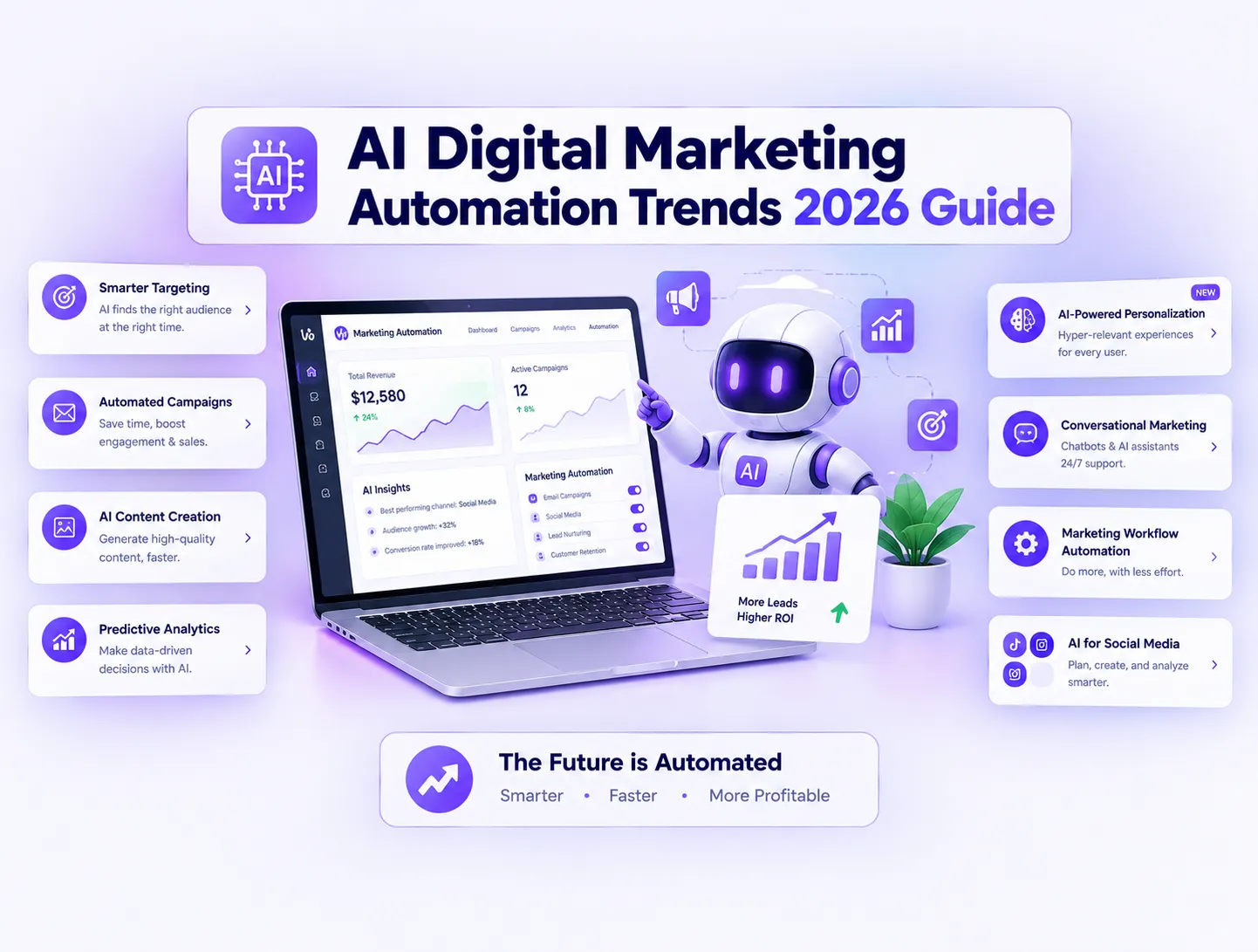
AI Digital Marketing Automation Trends 2026 Guide
Transforming modern business growth requires integrating artificial intelligence, predictive analytics, and smart automation workflows across every digital marketing channel. As global consumer engagement shifts toward hyper-personalized interactions and real-time automated communications, digital agencies must adopt advanced technological tools to maintain a competitive advantage. Leveraging high-performance web infrastructure through professional custom website development ensures that brands deliver lightning-fast digital campaigns, seamless user onboarding funnels, and optimized conversion tracking systems across global markets.
1. Generative AI and Automated Content Production at Scale
Generative artificial intelligence has revolutionized content creation, enabling digital marketing teams to produce optimized copy, dynamic email campaigns, and visual assets at unprecedented speeds. Advanced machine learning models analyze audience sentiment and past engagement metrics to generate targeted messaging tailored precisely to niche consumer segments. By automating repetitive copywriting and asset generation tasks, marketing professionals can redirect their creative focus toward high-level strategic planning, campaign optimization, and multi-channel brand positioning.
2. Predictive Analytics and Data-Driven Customer Journey Mapping
Understanding consumer behavior before purchase decisions occur gives forward-thinking brands a massive strategic edge over competitors. Predictive analytics utilize historical user data, browsing patterns, and transaction histories to forecast future purchasing intent with remarkable accuracy. Marketers deploy these predictive models to anticipate customer needs, deliver timely promotional offers, and map personalized user journeys across digital touchpoints, significantly reducing customer acquisition costs and boosting overall retention rates.
3. Hyper-Personalization and Real-Time Behavioral Targeting
Generic marketing emails and static website banners no longer capture modern consumer attention in crowded digital spaces. Hyper-personalization leverages real-time user behavior tracking to dynamically adjust website layouts, product displays, and promotional messaging for every individual visitor. Delivering tailored experiences based on immediate browsing context creates deep emotional connections with audiences, driving higher click-through rates and maximizing conversion velocity across e-commerce storefronts and SaaS platforms.
4. Conversational AI Chatbots and 24/7 Customer Engagement
Customer service expectations demand instant responses regardless of time zones or business hours, making conversational AI an indispensable marketing asset. Next-generation natural language processing chatbots handle complex customer inquiries, recommend relevant products, and process transaction support seamlessly without human intervention. Integrating intelligent conversational agents directly into digital platforms ensures continuous customer engagement, minimizes bounce rates, and converts casual website visitors into loyal brand advocates.
5. Automated Email Marketing and Omnichannel Workflow Engines
Email marketing remains one of the highest ROI channels when powered by intelligent behavioral trigger automation. Modern marketing automation platforms monitor user interactions across social media, web pages, and mobile apps to deploy contextual email sequences automatically. Whether triggering abandoned cart reminders or personalized onboarding milestones, omnichannel workflow engines ensure consistent brand messaging delivered at the exact moment of highest customer receptivity.
6. Voice Search Optimization and Conversational SEO Strategies
The explosive adoption of smart speakers and mobile voice assistants requires digital marketers to overhaul traditional keyword targeting approaches. Voice search queries feature natural, conversational sentence structures and long-tail question formats rather than fragmented desktop typing terms. Optimizing web content for voice search visibility involves restructuring FAQ schemas, targeting natural language phrases, and providing concise, authoritative answers to capture high-volume voice traffic.
Comprehensive AI Marketing vs Traditional Marketing Matrix
| Marketing Dimension | Traditional Manual Marketing | AI-Powered Automation Framework |
|---|---|---|
| Campaign Execution Speed | Slow manual deployment cycles | Instantaneous multi-channel rollout |
| Audience Personalization | Broad demographic segmentation | Individual hyper-personalized targeting |
| Data Analysis & Insights | Lagging retrospective reporting | Real-time predictive analytics |
| Customer Support Availability | Restricted to business operating hours | 24/7 conversational AI assistance |
| Content Production Volume | Limited by human writing capacity | Scalable generative AI asset creation |
| Conversion Rate Optimization | A/B testing requiring weeks of data | Continuous automated multivariate tuning |
7. Programmatic Advertising and Smart Budget Allocation
Paid media acquisition relies heavily on artificial intelligence to optimize ad spend allocation across search engines and social networks. Programmatic advertising platforms analyze millions of real-time bidding signals to place display and search ads in front of users most likely to convert. Smart budget allocation algorithms shift capital dynamically toward high-performing ad creatives and profitable demographic segments, eliminating wasted ad expenditure and maximizing return on ad spend (ROAS).
8. Ethical AI Transparency and Consumer Data Privacy Compliance
As marketing automation collects vast amounts of consumer data, maintaining strict privacy compliance and ethical transparency is non-negotiable. Modern brands must adhere strictly to global data protection regulations, ensuring transparent consent collection and secure data storage practices. Building consumer trust through ethical data handling protects brand reputation while fostering long-term customer loyalty in an increasingly privacy-conscious digital economy.
9. Future Outlook of Intelligent Digital Marketing Ecosystems
Embracing artificial intelligence and marketing automation is no longer optional for brands seeking global market dominance and high search visibility. Enterprises that successfully combine automated workflows with robust web engineering position themselves to capture immense organic traffic and sustainable revenue. Discover how Webnestech builds cutting-edge digital platforms engineered for speed, conversion optimization, and international market expansion.
Frequently Asked Questions
Essential technical questions regarding AI digital marketing trends, automation workflows, and performance optimization.
Generative AI accelerates content production by generating optimized copy, targeted email sequences, and visual assets at scale, allowing marketers to focus on high-level campaign strategy.
Predictive analytics forecast future consumer purchasing behavior using historical data, enabling marketers to deliver proactive offers and personalized experiences.
Conversational AI chatbots provide 24/7 instant customer support, answer product inquiries, and guide buyers through purchasing funnels without human delays.
AI programmatic platforms analyze real-time bidding data to shift ad spend dynamically toward profitable audience segments, maximizing return on ad spend.
Omnichannel automation coordinates brand messaging across email, social media, and web channels based on unified real-time consumer interaction tracking.
Ready to scale your digital marketing?
Our custom development team is here to build your high-performance platform.